Some text

Best Garage Flooring Options | Comparing Tiles, Rolls Rubber, Vinyl & Epoxy

Garage Flooring Options is an important area where vehicles, heavy machinery, oil spills, dropping of tools, water, dirt and frequent movements are common. Poorly constructed floors can quickly reveal any weaknesses of standard concrete floors. The proper choice of flooring material can make it not only cleaner, but also safer and more attractive.

Luckily, there are many options available for people living in residential or commercial areas. Garage Floor Tiles, Rolls, Rubber, Vinyl and Epoxy offer different benefits and can be used under various conditions.

Some floors require an easy installation process and fast completions with better chemical resistance and satisfying finishing. In this blog, we share valuable insights about garage floorings options that depend on your priorities, budget, and condition of the floor and usage requirements.

What Are the Best Flooring Options for Your Garage?

There is no one garage flooring material that suits all needs equally well. The flooring in a private home garage would be different from that used in an automotive repair shop, show room or commercial garage. Some of the most popular options are:

A proper selection of rubber floors and garage flooring options reduce the impact forces of falling weights and high-impact exercises as well as protect the sub-floor that controls the overall noise. The resilient material can help create a comfortable floor for exercises when standing, sitting, or stretching.

Garage_Flooring.webp.bv

Garage Floor Tiles

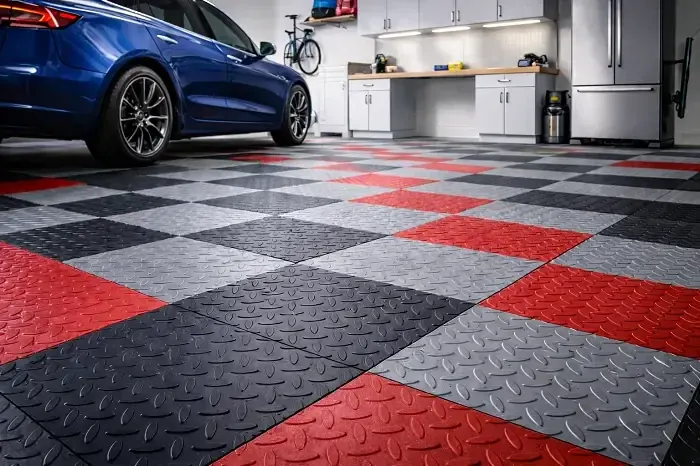
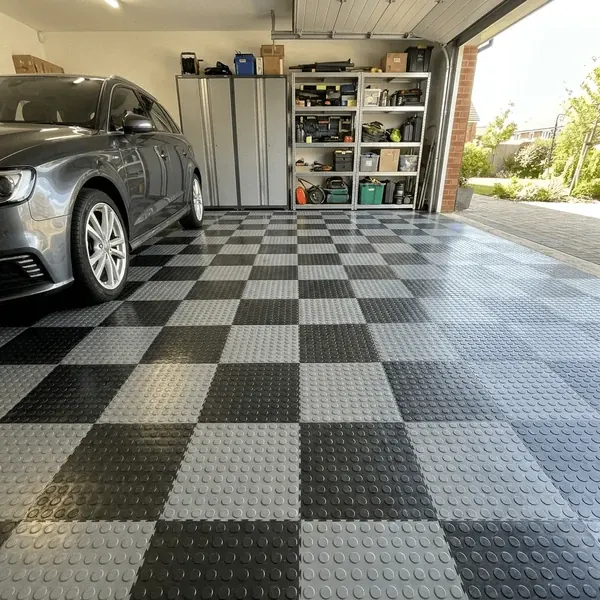
Garage Floor Tiles are one of the best options for those who like a strong material in specific sizes. Garage tiles are available in different materials, designs, textures and thicknesses with customization.

The interlocking floor tiles provide a smooth pattern design due to joined blocks without any bonding work. The damaged sections can easily be replaced without replacing the whole floor.

Why Use Garage Floor Tiles? Pros and Cons

  • Easier installation than some permanently installed floors
  • Replacement of single floor tile is easy
  • Availability of many colors and patterns
  • Durability under regular garage use
  • Access to the floor below
  • Tile floors can trap moisture, dust and other debris.

Garage Floor Rolls

Garage floor rolls provide smooth flooring coverage of a wide area through the use of relatively few joints. These rolls are made using resilient materials that withstand vehicular traffic and garage activities.

Garage roll’s greatest advantage is the speedy installation process where one roll is installed on the prepared floor surface then trimmed to fit the size of the room. The concrete floor surface requires proper cleaning, dryness, and leveled before installation.

PVC-Garage-Flooring

Pros and Cons of Garage Floor Rolls

Garage floor rolls is the ideal option if you need:

  • Wide coverage
  • Quick installation
  • Minimum joints
  • Easy cleaning
  • A solution for wider areas

Rubber Garage Flooring

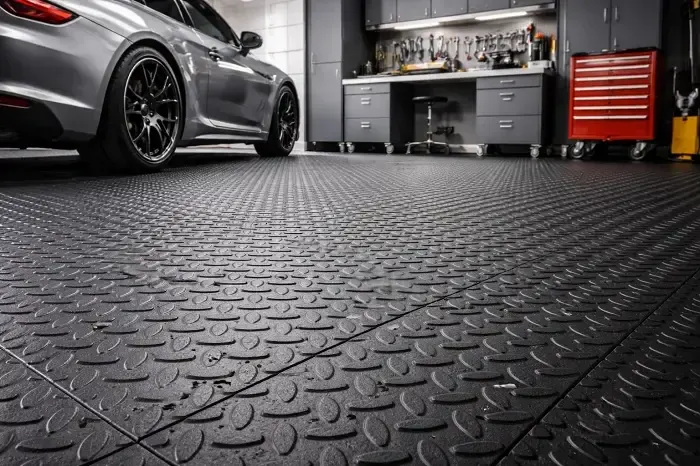
The Rubber Garage Flooring product has a different nature in terms of impact and resilience. It reduces the impact of heavy tools and is more comfortable for people working there on a regular basis. Rubber is usually found as a variety of tiles, mats and rolls.

On the other hand, various types of rubber have different resistance properties against oils, solvents, chemicals and other materials. If the garage meets lots of auto fluid use, consult the manufacturer’s resistance specification.

Metallic-Epoxy-Flooring

Where Does Rubber Flooring Use?

  • Home workshops
  • Exercise areas inside the garage
  • Automotive work areas
  • Storing and using tools and equipment
  • Utility areas
interlocking-garage-floorings

Vinyl Garage Flooring

Vinyl can put on various materials such as stone, concrete, wood or others for providing durability. In addition, vinyl floors are rather easy to clean and provide a comfortable feeling. You can get more durability and color options with decorative finishes.

In case a garage is a place for different activities apart from storing a car, vinyl flooring can be a good choice. However, not all vinyl flooring is likely for harsh automotive conditions and before selecting it one should think about the load of vehicles, chemicals and the application range recommended by a manufacturer. 

Moreover, the surface where vinyl is set to be installed is also important. Uneven concrete can affect the final result and that’s why it shouldn’t be overlooked.

Epoxy Garage Flooring

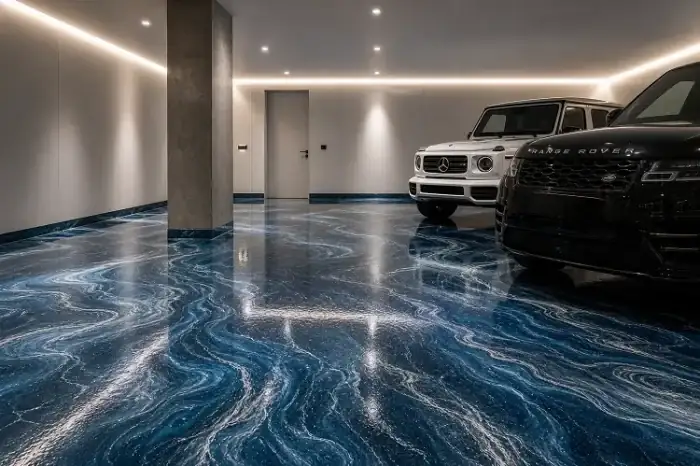
Epoxy garage flooring is one of the most popular flooring types for creating a durable and smooth looking floor over concrete. The process consists of applying a resin-based coating to a correctly prepared floor surface.

Epoxy coating is an especially great choice for garages due to its high resistance to scratches, staining and common automotive chemicals. The critical factor here is the installation process. Epoxy performance relies greatly on surface preparation and conditions of its application. 

The concrete requires cleaning and preparing before coating. Moisture can affect the performance of the coating, so testing is necessary before applying it. Unlike the modular tile system, epoxy flooring cannot be easily repaired by replacing just one tile.

What Are the Benefits of Epoxy?

  • Smooth look
  • Durability of the surface
  • Easy to clean
  • Stains and chemicals resistance
  • Wide variety of decorative choices
  • Good polishing finish

Garage Flooring Comparison: Tiles vs. Rolls vs. Rubber vs. Vinyl vs. Epoxy

Each flooring type has a different performance profile. The best option depends on what matters most in your garage.

Flooring Type Durability Installation Maintenance Best for
Garage Floor
Tiles
High Easy to
moderate
Easy Custom designs and
replaceable sections
Garage Floor
Rolls
High Relatively
quick
Easy Large areas and
continuous coverage
Rubber
Garage
Flooring
High Easy to
moderate
Easy Workshops and impact-
prone spaces
Vinyl Garage
Flooring
Moderate to
high
Moderate Easy Decorative and
multipurpose garages
Epoxy Garage
Flooring
Very high More
demanding
Very easy Heavy-duty and
professional-looking garages

What Type of Garage Flooring Should You Choose?

Start by considering how the garage will be used instead of looking at the aesthetics only.

Know the Vehicle Traffic Potential

Choose a material that is fit for the expected traffic volume and weight of vehicles in case there are frequent arrivals and departures of the vehicles.

Think about Chemical Exposure

There can be various chemicals exposed to the flooring in a garage, such as motor oil, grease, cleaners, fuel, etc. Pay attention to it when choosing the right floor covering.

Consider the Installation Process

In case you need to have a quick flooring change, go for tiles or rolls. Application of epoxy is a more complicated process.

Overview the current floor condition

Flooring cannot hide any issues connected with concrete, such as cracks, uneven surface, and moisture. So, check your concrete floor before choosing the flooring material.

Consider Aesthetics

If the aesthetics play an important role in your choice, go for tiles and epoxy. There is also vinyl available. Rubber does not pay much attention to the looks.

Focus on Long-Term Maintenance

The flooring in the garage shouldn’t give you extra maintenance to do. Consider a surface that suits the kinds of dirt, water and spills that your garage gets.

Check Your Budget

Above all else, remember that it is better to consider the overall value than just the upfront cost. An inexpensive surface that requires frequent replacement can end up costing more over time than quality material.

Garage Floor Installation and Maintenance

For most types of flooring, clean the concrete properly and examine the subfloor before the installation process. Contamination, dust, loose material and grease can affect adhesion or proper placement of flooring material. Also, cracks and unevenness of the surface requires proper fixation.

The installation process depends on the specific flooring type. For tile floors, it requires placing tiles in accordance with the specific flooring design pattern. Furthermore, measure, place, and cut the rolls appropriately.

  • Rubber flooring can be installed using tiles, mats and rolls.
  • Vinyl floorings require proper fitting and preparation of the floor.
  • The preparation for epoxy requires proper concrete profiling and coating.
  • Sweep and vacuum any loose dirt and clean up spills after the installation.
  • Do not leave vehicle liquids on the flooring for long periods.
  • Conduct regular inspections for loose corners of the tiles and flooring.

Concluding Thoughts

Selection of the Best Garage Flooring Options depends on various factors, such as durability, aesthetic look, and easy maintenance. Garage floor tiles provide flexibility along with the ease of replacing sections individually. Rolls cover large areas and reduce seams. 

Rubber Garage Flooring provides impact resistance whereas vinyl will provide various design options and epoxy creates a strong and smooth surface finish. But taking a final decision, consider different concerned factors like traffic, chemical exposure, quality of the concrete base, installation needs, aesthetics and maintenance considerations.

No results found.